Install
OceanTree hardware and site configuration for commercial, institutional and public environments.
EXISTING PRODUCT DIRECTION
OceanLux is assembling an integrated biological air-infrastructure platform: systems installed in spaces, sustained through service, informed by environmental monitoring, and extended through future research.
Proprietary biological operating methods, in-house product engineering and field learning, with patent matters available for qualified due diligence.
Installed commercial equipment alongside staged architectural and systems R&D.
Commercial buildings, transport facilities, industrial campuses, public environments and partners.
The public site does not publish funding asks, valuation, revenue forecasts or confidential pipeline. Interested investors may request company materials through a qualified introductory conversation.
A system lifecycle designed for buyers who need deployable hardware, ongoing upkeep, reliable measurements and a credible route toward larger biological infrastructure.
OceanTree hardware and site configuration for commercial, institutional and public environments.
EXISTING PRODUCT DIRECTIONCulture care, consumables, periodic maintenance, on-site training and operational continuity.
RECURRING SERVICE MODELAQI, CO₂ and environmental measurements with responsible reporting and data interpretation.
DEVELOPMENT / DEPLOYMENT DEPENDENTPathways in HVAC, architecture, BioClad and biological systems for larger commercial infrastructure.
R&D ROADMAPBeyond deployed OceanTree installations, these are concept and R&D pathways—not delivered projects or established performance results.
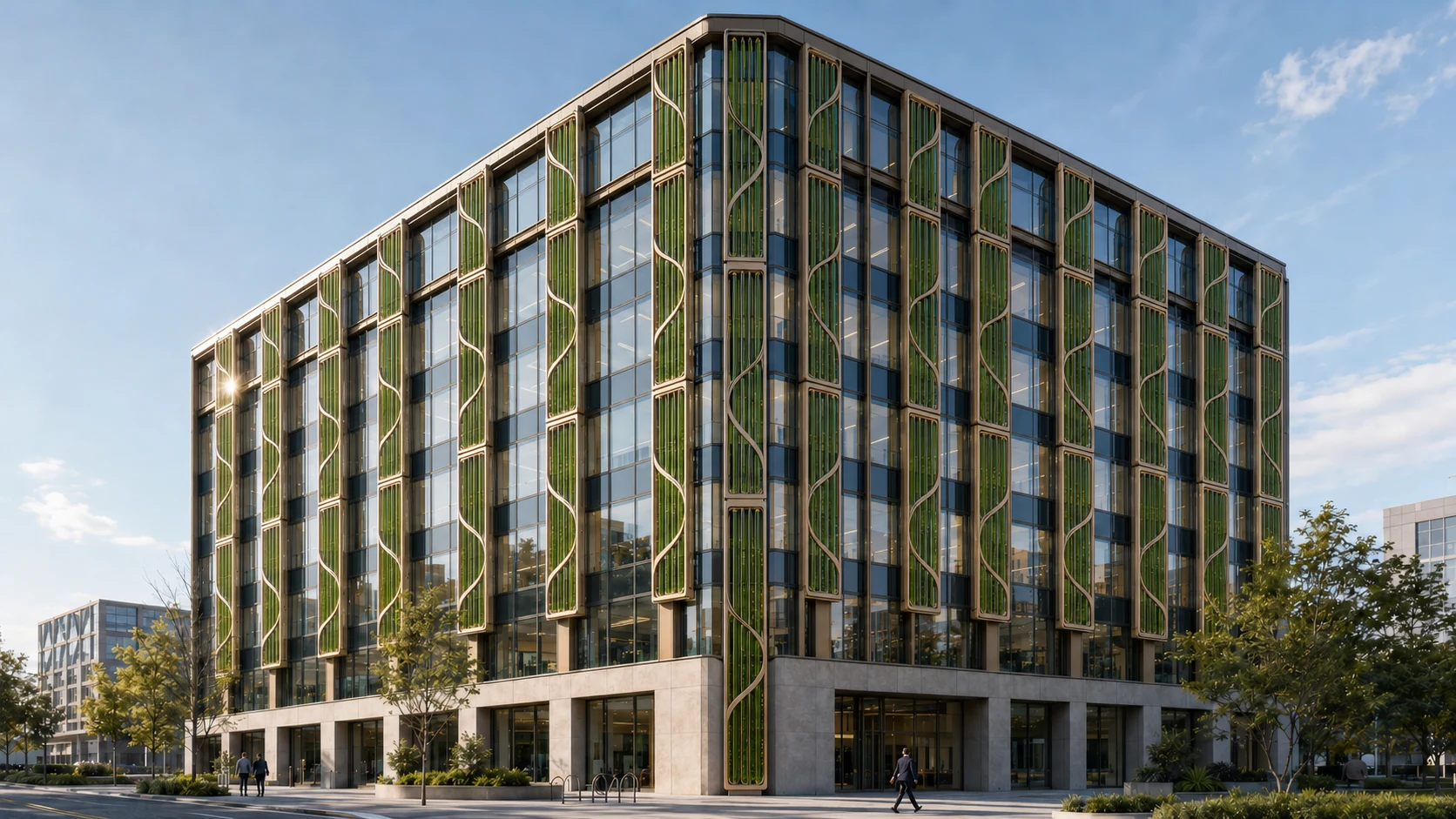
Exploring microalgae culture modules within commercial building envelopes, combining biological CO₂ utilization with architecture and environmental monitoring.
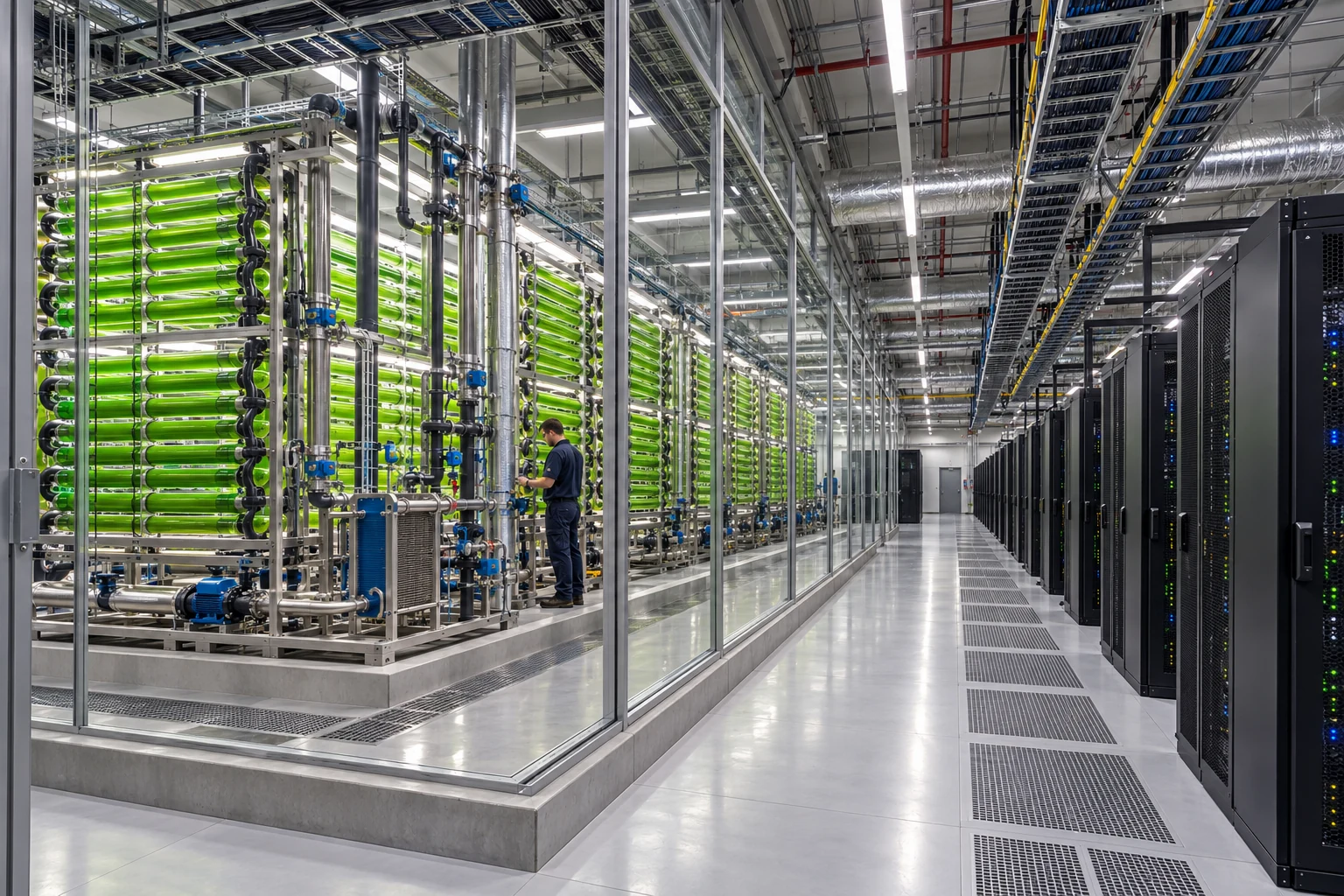
Investigating modular biological systems, waste-heat integration opportunities and monitoring as part of future low-carbon data-centre infrastructure.
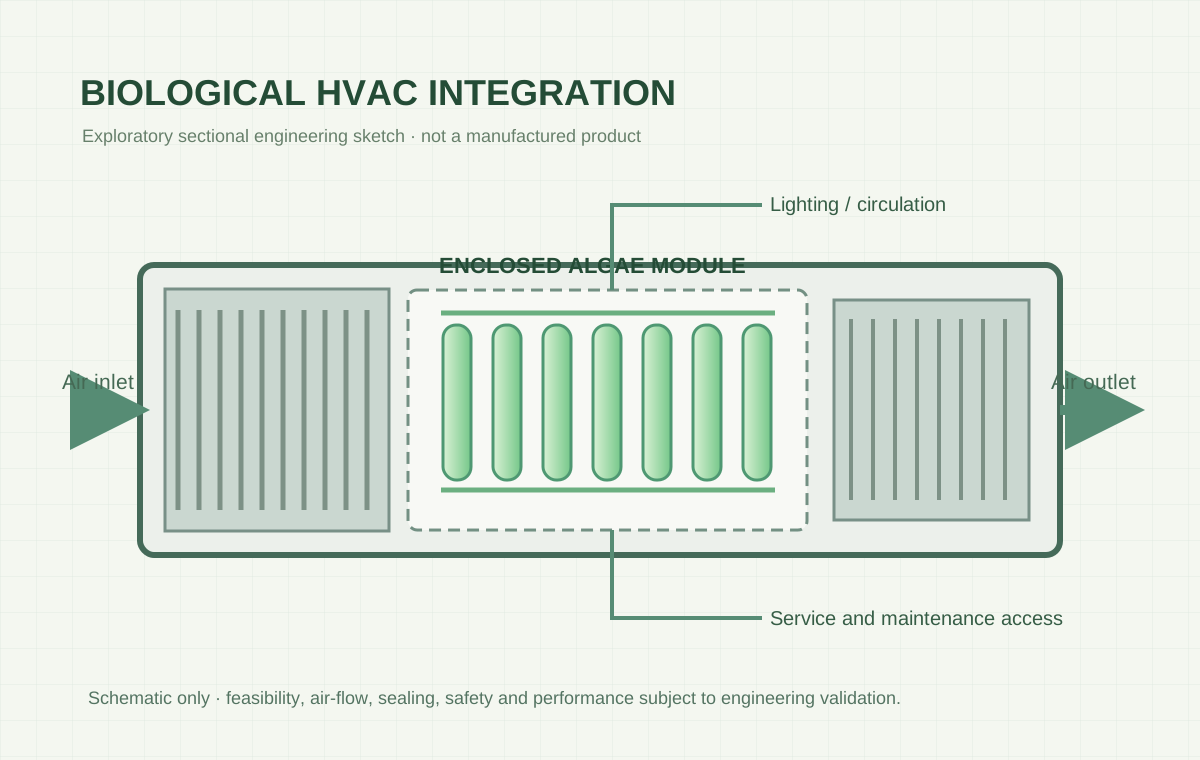
Conceptual engineered algae modules for controlled laboratory investigation of indoor CO₂ management, airflow, lighting, sealing and maintenance.
Environmental sensors and reporting interfaces can help distinguish system operation, site conditions and customer-relevant evidence. The display shown is an illustrative interface, not connected live telemetry.
Working photobioreactor products, field installation photographs, internally reported biological operating parameters and documented technical development. Requests for test documentation and project permissions are welcomed.
A potential revenue stack includes equipment sales, annual maintenance, culture consumables, service visits, training and—where validated—monitoring and data services. Terms depend on deployment contracts.
Scaling cost, customer adoption, installation uptime, biological output under new conditions, HVAC safety and sealing, building-envelope engineering, data-centre integration and full lifecycle impact.
Customer leads are not orders; prototype studies are not mature products; modelled results are not verified environmental credits. Technical and financial diligence materials can be shared directly where appropriate.